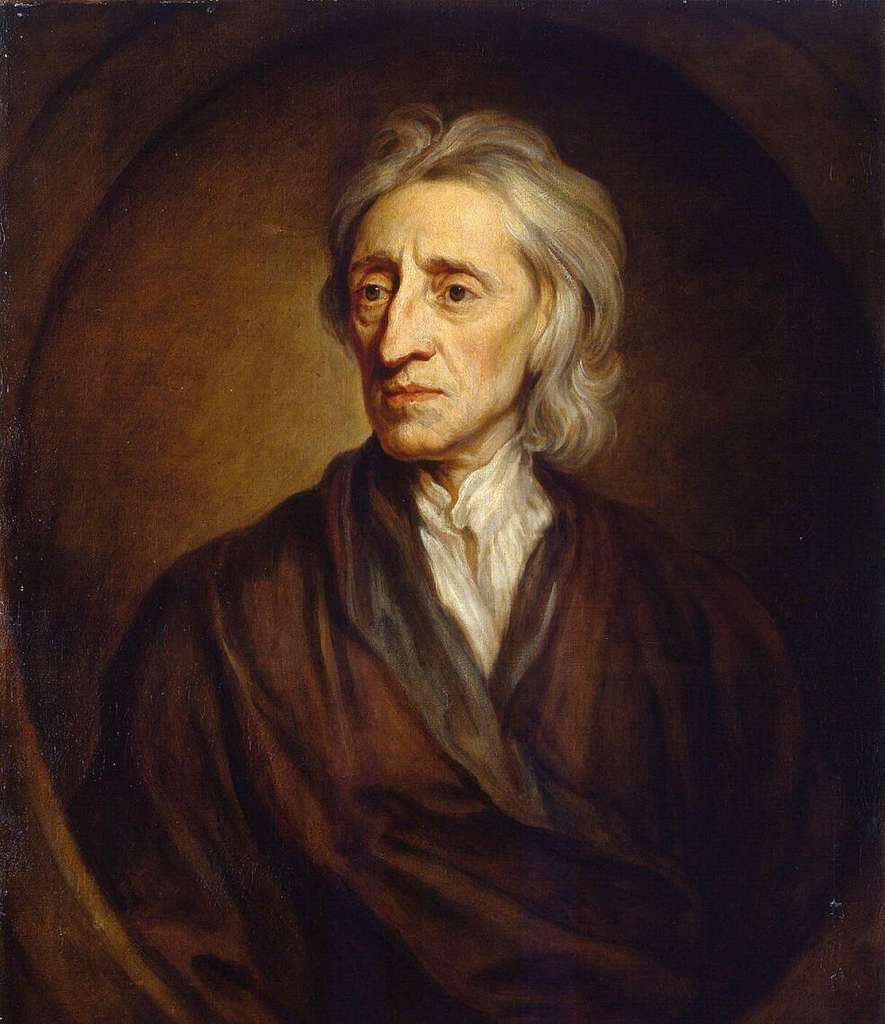
The idea that people, or society, create institutions for the public good stems from the 17th and 18th Century thinking and writing of Thomas Hobbes, John Locke and Jean-Jacques Rousseau. Their philosophy may trace back to Socrates in the 4th Century BCE, who wrote about the individual’s responsibility to follow the law of the land, or the government, that protects him.

Hobbes an English philosopher, in a 1651 book called Leviathan wrote about the “social contract” theory, or the idea that societies succeed when people agree to follow specific rules and norms. That means that people surrender some of their autonomy to follow the rules. But the rules apply to all. He also supported the idea of an absolute sovereign, king or leader, to hold it all together and protect people from their own selfishness.

John Locke took a different view of the social contract. He saw self-interest as the motivating factor. If we lived in what he called the “state of nature” we would not be able to achieve wealth and success. We need government or structure with rules to help us do that and we agree to do that so we will prosper and live in harmony. He also pointed out that people had the right to protect their lives and their property from an unfair government and his ideas were particularly influential to the U.S. founders and the framing of the U.S. Constitution.
In his Second Treatise On Government, in 1689 he wrote:
“Every one, as he is bound to preserve himself, and not to quit his station wilfully, so by the like reason, when his own preservation comes not in competition, ought he, as much as he can, to preserve the rest of mankind, and may not, unless it be to do justice on an offender, take away, or impair the life, or what tends to the preservation of the life, the liberty, health, limb, or goods of another. . . .”
That’s where we get the idea of “life, liberty and pursuit of happiness,” in the U.S. Declaration of Independence.

Rousseau, in 1762 took this further and saw the state as the creation of the people to uphold the common good. But when government usurps the power of the people the social contract is broken, and citizens have the obligation to rebel. Freedom is the key for Rousseau.



Leave a Reply